The App
What you see
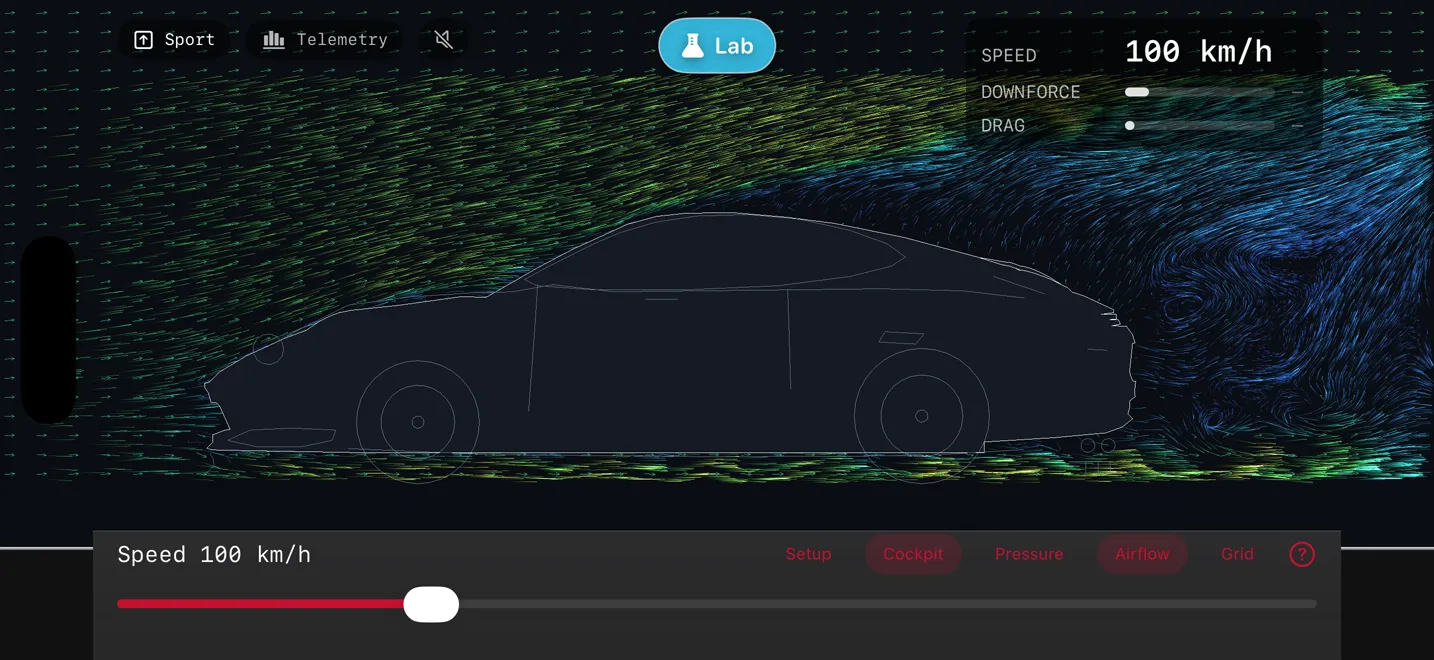
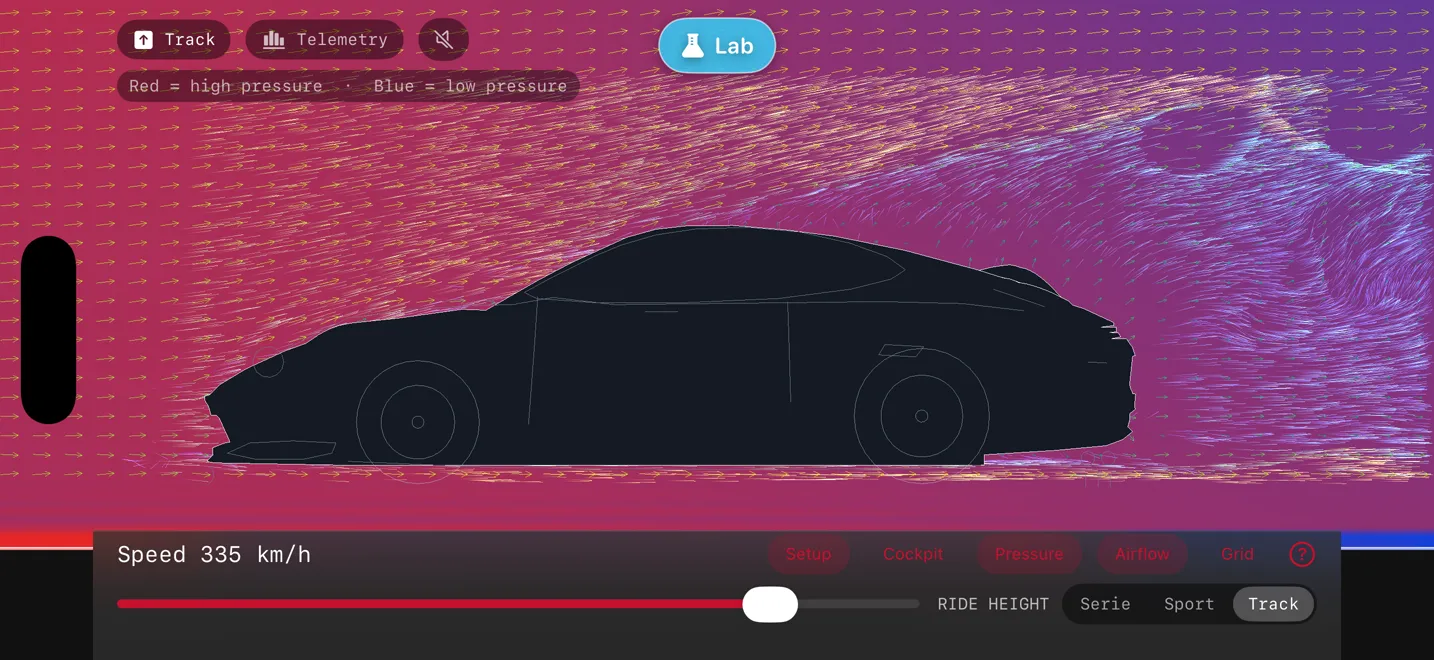
The air piling up at the nose. Racing over the roofline. Letting go behind the rear glass and tumbling into a living, rippling wake. Push the speed and the whole scene tears faster. Raise the rear spoiler — or choose a fixed rear wing instead — and watch the same air close around a different shape. It is the magic you feel through the seat of a fast car — finally made visible.
One finger, full control
A single slider takes you from a standstill to 400 km/h. No menus full of numbers. No homework. Just speed, color, and motion — the thrill of acceleration on demand, any time, no track and no ticket.
Fixed Rear Wing
New in Version 1.9.2: a fixed rear wing joins the active spoiler as a second way to hold the rear of the car. Switch between them and the same live air answers around a different shape — still Beta, already worth the look.
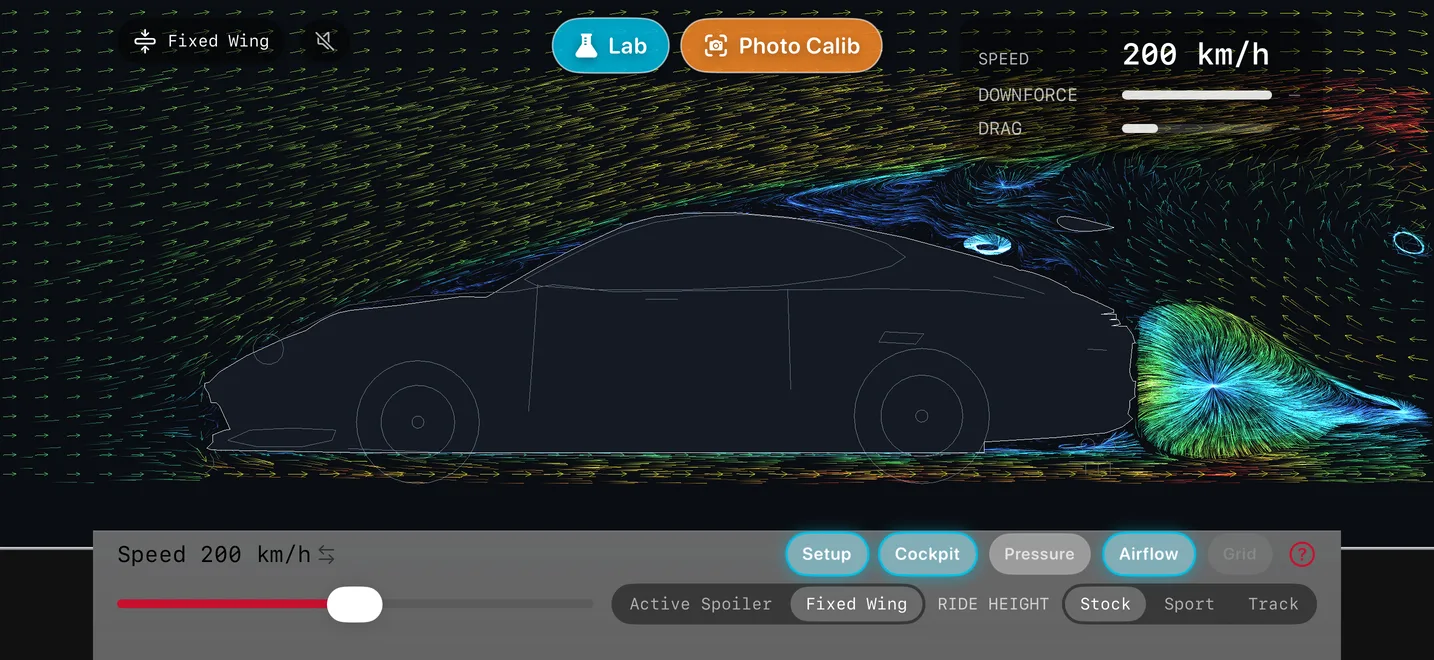
Photo Import
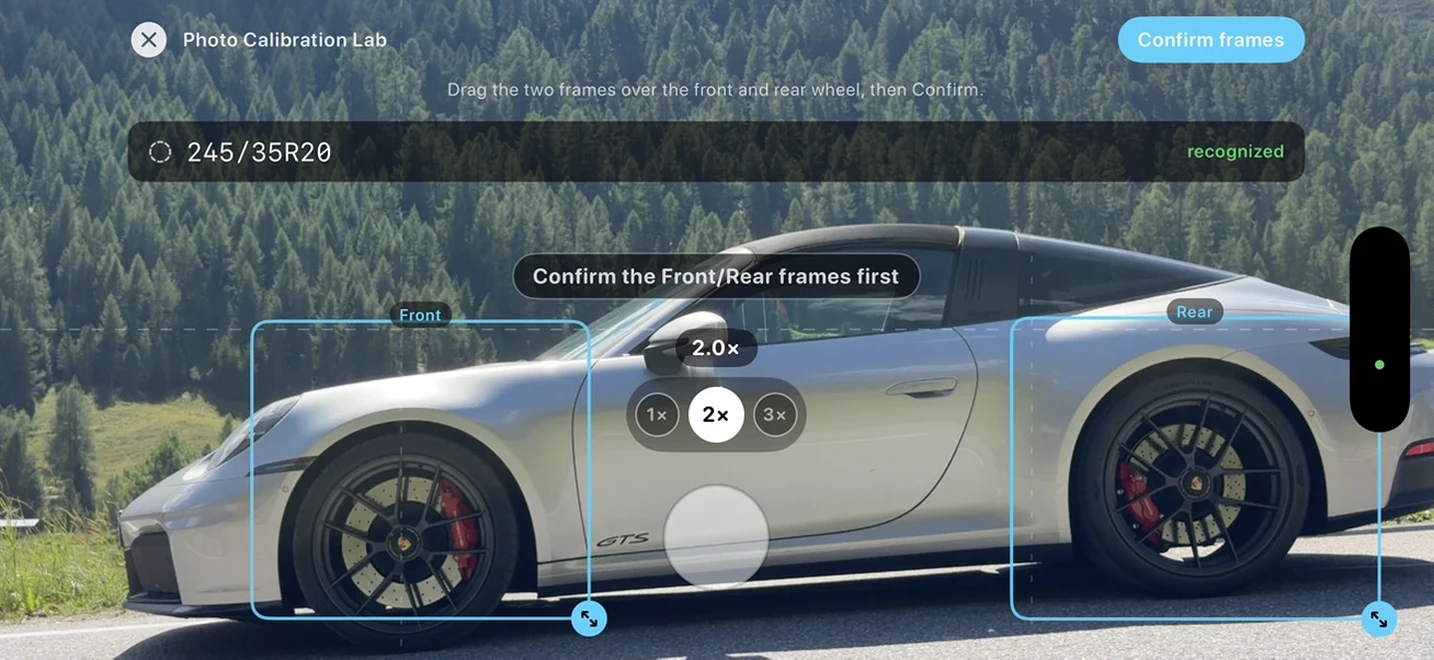
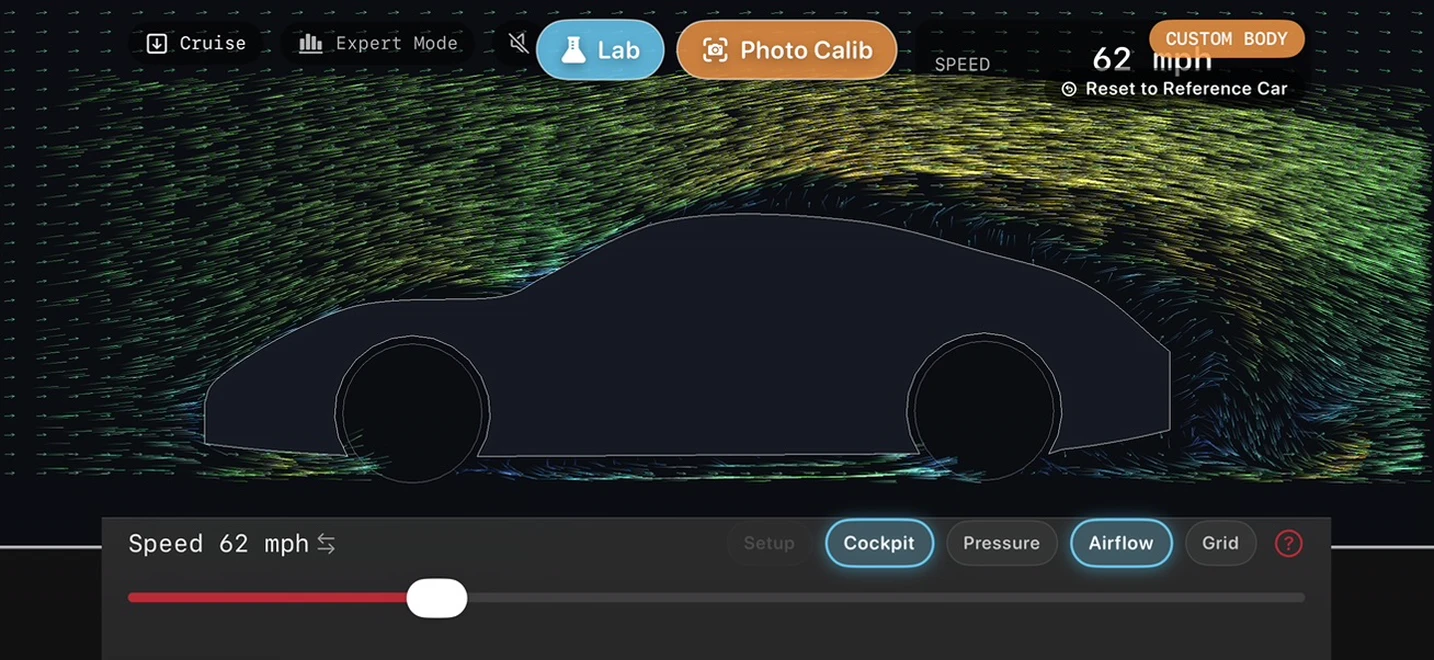
Point your iPhone at any fast car and bring it straight into the app. A quick on-screen alignment locks your photograph into the stream, and the same live airflow that shapes the reference silhouette moves around the exact shape you captured — no waiting, no reference car required.
Setup Lab
Version 1.4 adds three ride-height stages — Serie, Sport, and Track — and the body drops visibly lower as you step through them, right over the live underbody flow. A setup-delta readout tells you exactly what each stage changes, plainly, in numbers — no ranking, no claim of a “best” setup, just the trade-off laid bare for you to read. Every ride height is included.
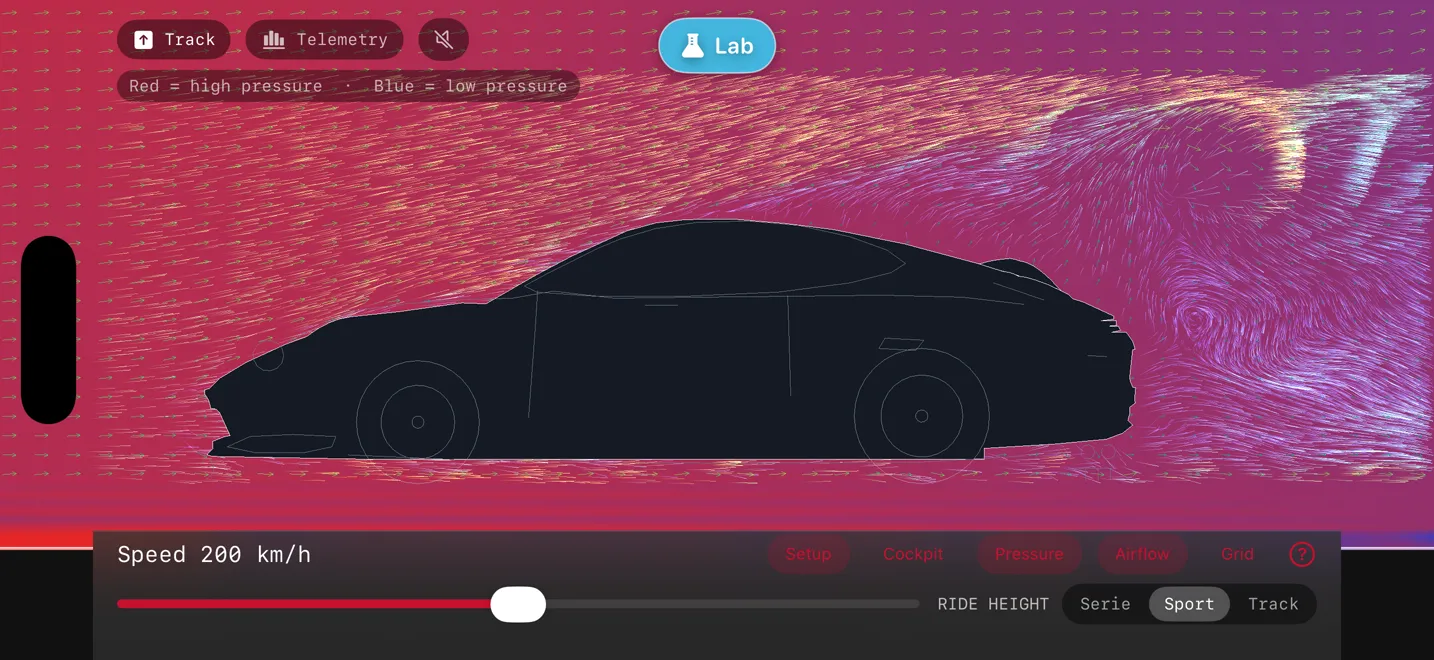
A new help sheet walks through why the setup works the way it does — how the splitter lip up front and the diffuser out back trade off against each other, and how that balance shifts as speed builds. Nothing here is dressed up as advice; it is the physics, shown plainly.
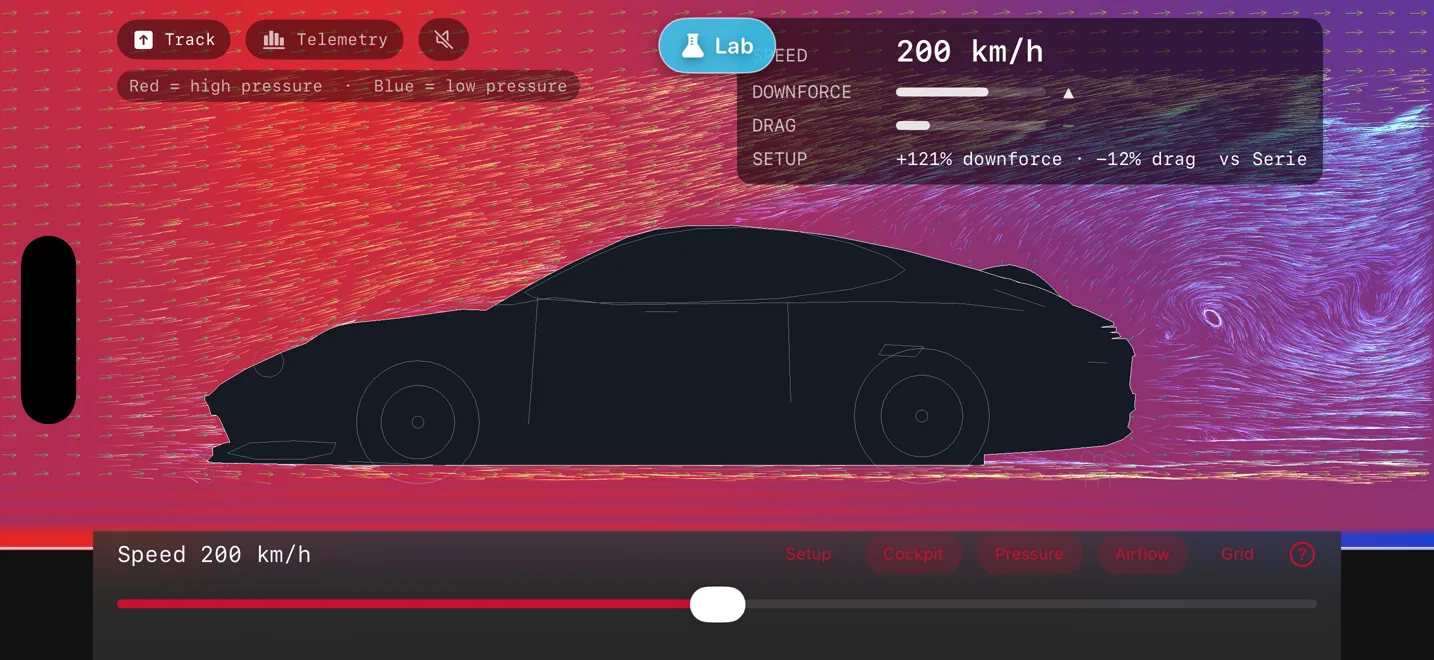
Quietly serious
Honest physics drives every frame, but you never have to think about it. It runs entirely on your device — no account, no subscription, no catch. The legendary flat-six silhouette alive with motion wherever you are.
Everything included
The live airflow view runs on the reference car and on your own, at any speed, with every view and every setup included — stock stance to track, active spoiler to fixed wing. No account, no subscription, no in-app purchase.
Beyond the car — the canonical cases
Behind the car sits a small laboratory of the flows every aerodynamicist learns first. The same solver runs each one live, so these are not textbook diagrams — they are the physics, happening.
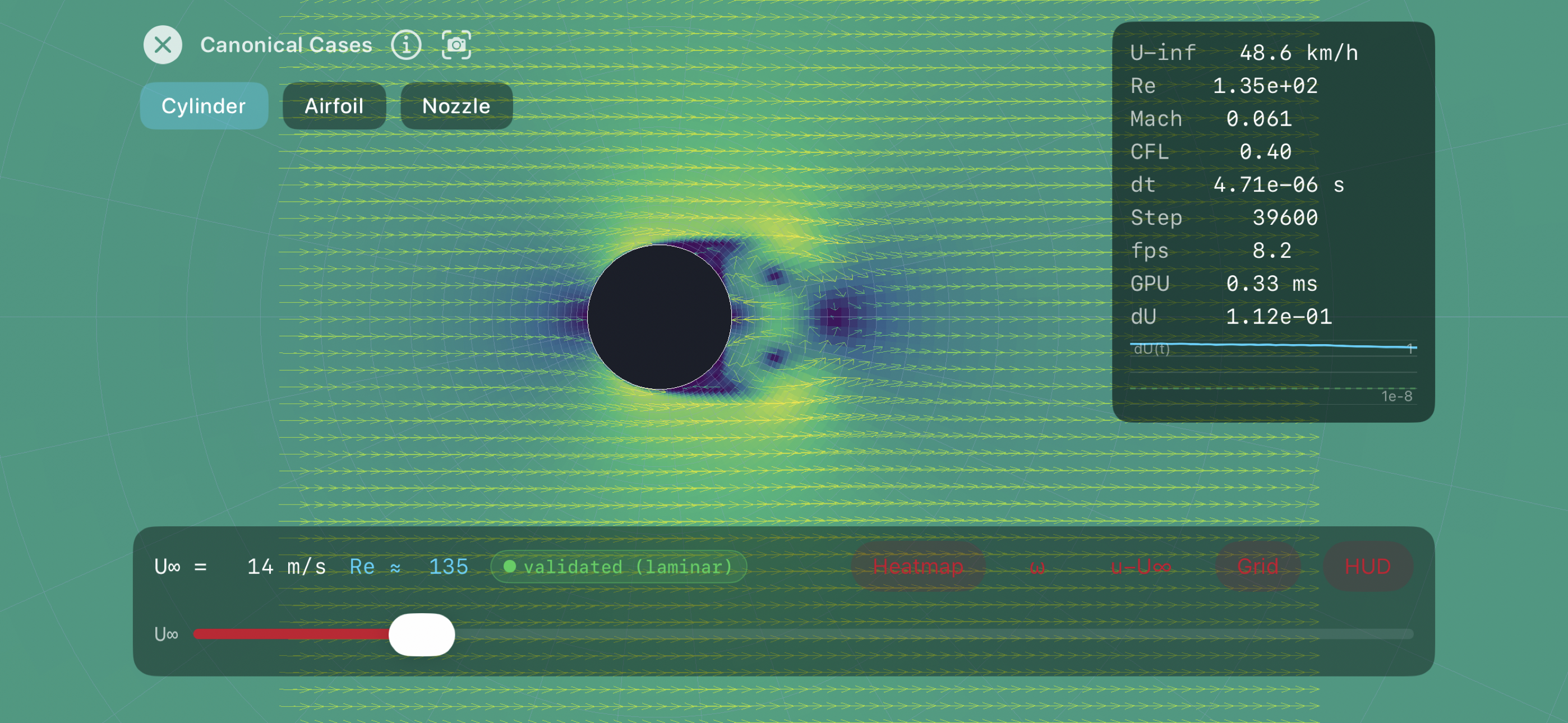
The cylinder
A plain circular cylinder cannot keep the flow attached around its back. Past a certain speed the wake breaks into a steady alternating beat — the von Kármán vortex street, the same effect that makes power lines hum. At this Reynolds number the wake is laminar and the case is a known benchmark, so the shedding rhythm reads true straight off the screen.
The airfoil
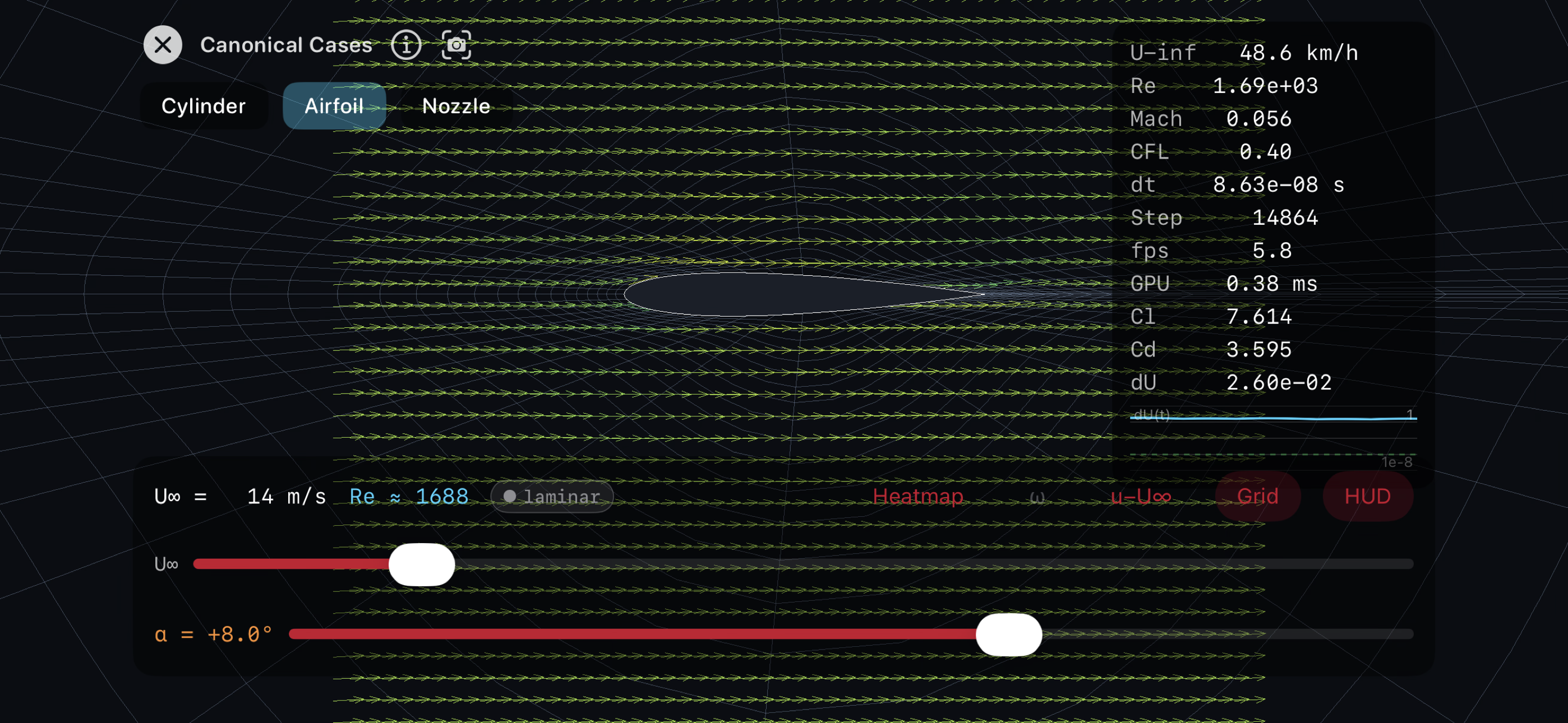
Tilt an airfoil into the stream and the air does the work of flight: faster over the top, slower beneath, turned downward as it leaves the trailing edge. That turning is lift. Raise the angle of attack and the field answers, with the lift and drag coefficients tracking live alongside — the link between what you see and what the wing feels, never abstract.
The nozzle
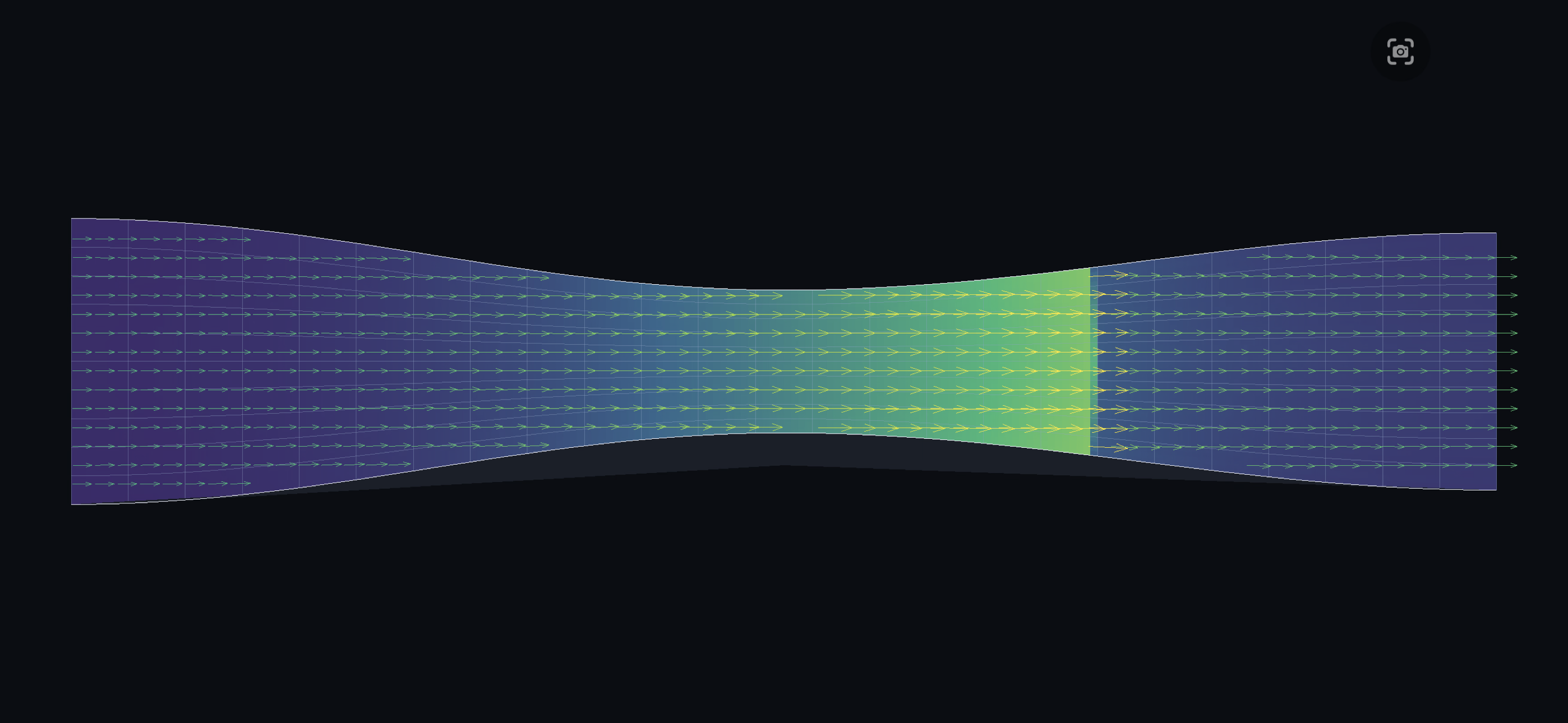
A converging–diverging nozzle — the de Laval shape behind every rocket and wind tunnel — trades pressure for speed. The flow squeezes through the throat, accelerates, and the color map lifts from cool to bright as it goes: where the passage narrows, the flow must hurry through.
How the picture forms
The flow you see is being computed, not played back. The app solves the equations of moving air thousands of times a second, and each pass refines the one before it. When you first change the speed, the opening moments are a rough first approximation; with every further pass the solution converges — it reproduces the real physics more and more closely, until the picture settles into what the air actually does. It is the same idea as a photograph developing: indistinct at first, then sharp and true. Nothing here is pre-rendered.